As I have told you before, I read six books about babies before having babies. It should be no surprise I’m delving into books about child rearing. As part of that endeavor, I will note American children don’t seem to be doing very well. Notably in the fact that they are the most likely in the civilized world to be killed by violent means thanks to our obsession with firearms. They suffer from hunger because the most prosperous nation in the world doesn’t believe food is a right and from illness because we have decided modern medicine is a crock and we’d rather die from small pox and measles.
(Sometimes I rather hate writing because I inevitably digress into remonstrations against our modern era when I mean to be helpful. Oh well. You need to hear it and be angry and go do something about it at every corner)
All the life-threatening detriments aside, American children aren’t doing well in the traditional hurtles of existence. As a nation, we’re lonely and afraid. Our educational and support systems aren’t providing what our children need. So in my quest to learn about how I should raise my children, forgive me if I thought advice from other nations would be preferable. Here’s what I can offer from the ones I’ve read so far.
Bringing up Bebe by Pamela Druckerman
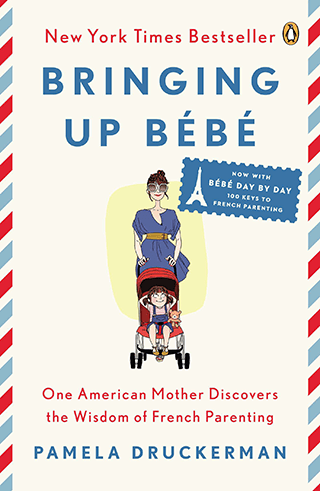
From France, Children are here to be part of our lives, not overrule them.
Bringing Up Bebe follows Pamela Druckerman, an American abroad, as she navigates motherhood in her new country. One of Druckerman’s fascinations was how keen French mothers are to keep their identities. While American working mothers seem to roil in the guilt of going to back to work, French women revel in it. Although landing a spot in crèche, French daycare, remains competitive, the prevalence of both private and public options allows many French mothers to return to work. And they do. As Bebe quotes, “When I tell Americans that I have a child, they usually ask, ‘Are you working?’ Whereas French people just ask ‘What do you do?’
We can debate about ‘what’s best for the child’ but French women returning to their lives as they had them before plays into the larger scheme of French opinions on identity which they instill in their children. You are yourself, but you exist in the world. You will not be catered to. You are expected to have manners,. You are expected to engage -be it for chores or in conversation. And you will be deferred to so as you defer. You think therefore you are…so you better act like you think. How very French.
Actung Baby By Sara Zaske
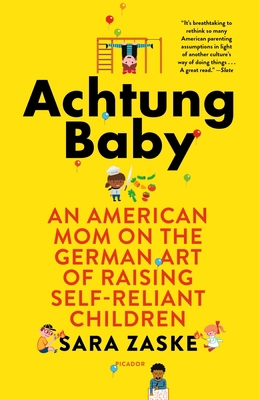
From Germany, Danger is necessary to learn limits.
We live in a nice, normal suburb in the South. Not a quarter of a mile from my house, there is a church with a playground. If I told you, when Ivy was 5, I would let her walk to it and play on her own? What would you do? Did you just cringe?
Now what if I told you a German child of similar age would be expected to navigate to their elementary school from their apartment in the thriving metropolis of Berlin by themselves? In America, you may be arrested. In Germany, it’s the norm. Alongside the danger of navigating transit, German children have access to Adventure Parks, places with very “dangerous” playgrounds where kids can learn how to manage hand tools and fire or climb to dizzying heights on imposing structures. The simple idea being that “danger” is everywhere, and you must learn to manage it yourself. Ultimately only you will be responsible for your life, so the sooner you learn to navigate peril, the better off you’ll be. Indeed, Zaske mentions studies on children’s well-being and perception of risk by Ellen Sandseter which suggests we may be giving our children all of anxiety disorders by overprotecting them.
“In the name of safety and academic achievement, we have stripped kids of fundamental rights and freedoms: the freedom to move, to be alone even for a few minutes, to take risks, to play, to think for themselves.” Of course I don’t want to knowingly put my child in life-threatening peril. I want her to be bold but wary and the best way to do that is to let her learn something of danger.
The Danish Way of Parenting by Jessica Jolle Alexander
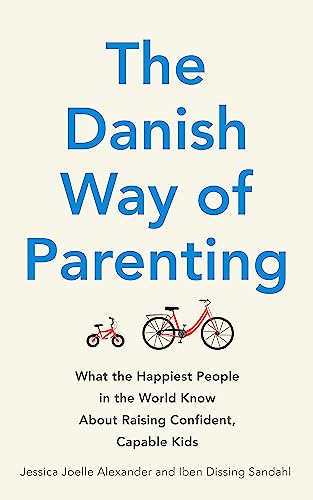
From the Danes, Happiness and health comes from play.
In America, we do not like failure. Everyone needs to be the best. Everyone needs to be a winner. We put our children into school with purpose. Learn everything that they can and achieve, achieve achieve! And we have created a culture that is worse for it.
It’s easy for me to see as a recovering overachiever. Especially one growing up in the era where everyone gets participation trophies. (For the record, participation trophies are a crock. You know damn well if you won or not). It’s a culture I can now critique. You’ve probably seen the TikToks or Instagram memes as I do about the recovering “gifted kids” of the 90s. We were raised in a world where people thought valuing our abilities and intellect would help us grow into successful people who would save the world and all it did was give us crippling anxiety for all the expectations shoved upon us.
The Danes are not like that. Rather than praise academic achievement, most of childhood is about learning empathy, community, and resilience. What this looks like is letting children play for plays sake, letting them learn to negotiate tricky scenarios themselves, and ultimately letting them learn how to fail. Whether they fail or succeed is not the commentary. Instead, Danish parents focus on ability and “trying your best” Children are not praised for getting the right answer. They’re praised for the effort and work they put in.
And finally “Hygge” the practice of coziness. Spending time together as a family, no TV, no agenda, nothing other than company. I laughed out loud, and then mourned a little, when reading the second hand copy of the book because of this. The precious owner was a mother completely uncomfortable at the idea of spending time together -her, her husband and her child. To be fair, I don’t know how old her child was -maybe she’s a bratty teenager. I wonder often if what we’ve gained in authenticity in America is what we’ve lost to loneliness. In many instances it is important to live your truth, but some hills aren’t worth dying on compared to the warmth you can get through sharing time together. Even a prickly loner like myself can feel the tension ease when i laugh at something with a friend.
Happy, Healthy, and Independent
If you ever asked my father what he wanted for his children -or even if you didn’t- he would offer the same response. “I want my children to be happy, healthy, and independent.”
Looking over his brood, self not included, it would seem he’s succeeded. My parents found their way to these lessons themselves but I can see threads of them throughout.
 The Chemistress